What head styles & drive types are available on self-drilling fasteners?
In addition to functionality, optics also play a role in the screw heads. In the following, we will therefore take a closer look at the most common head styles and drives for self-drilling screws:
Hexagon Head & Drive
In the case of screws with a hexagon head, we speak of hexagon screws (also called wrench screws). As a drive, the hexagon head has the great advantage that the surfaces of the head realise greater power transmission, and the screw can be gripped from all sides. A little more space is required at the screw-in point for the use of a hexagon nut socket. However, the combination with the nut socket enables good and safe guidance of the screw during the drilling process.This head style is particularly widespread for drilling and self-tapping screws and is mainly used for fastening sandwich panels in the roof area. As an example, we have the EJOT JT3, JT4 and the JZ5 product series.
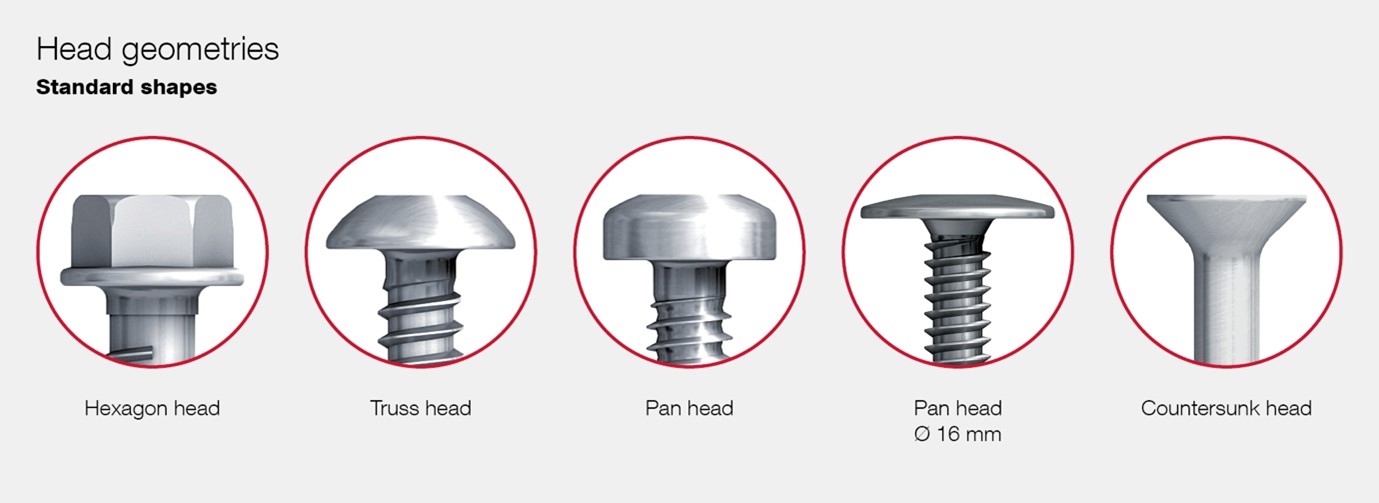
Truss Head with Hexalobular
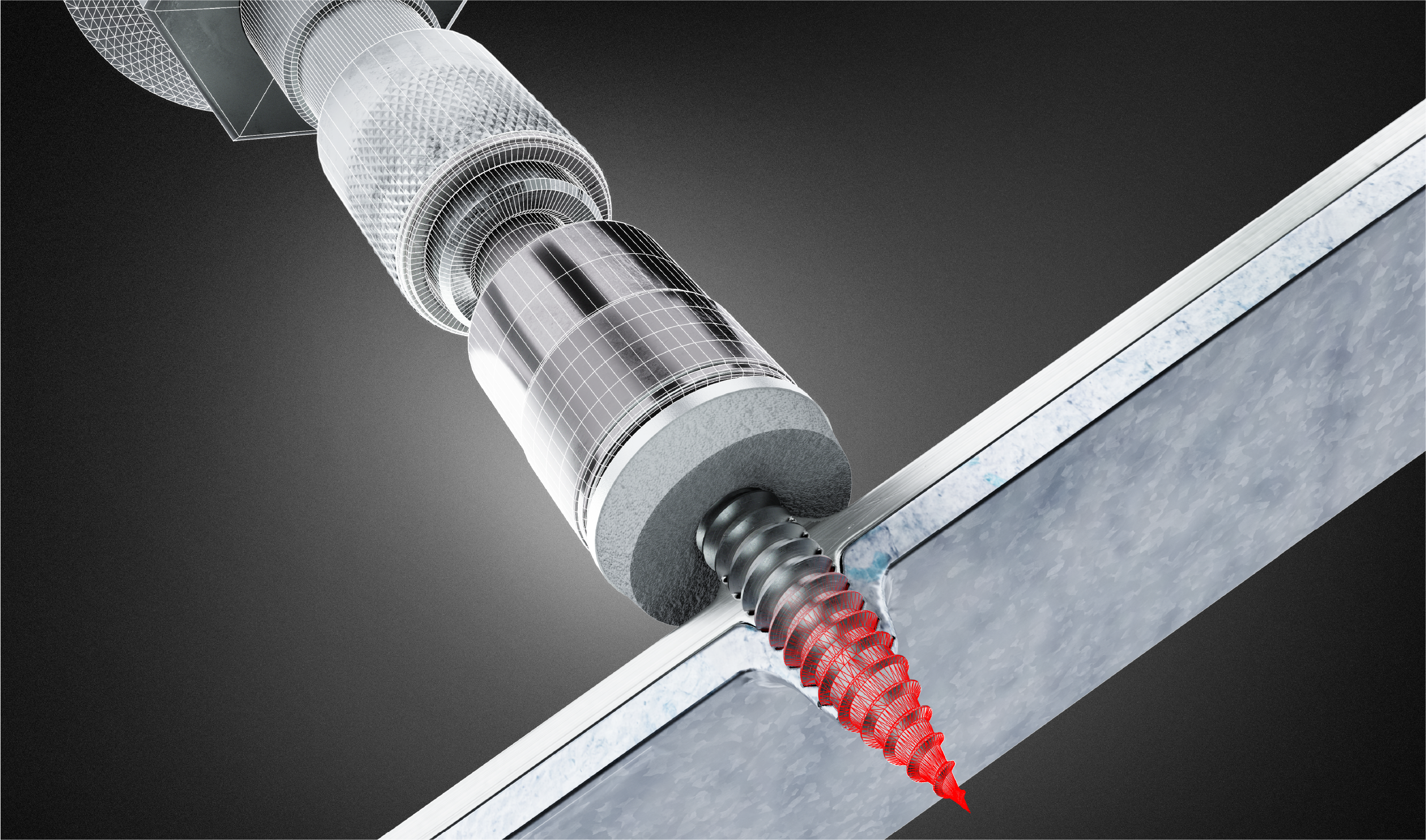
The truss head is characterised by an internal drive, which is usually a hexalobular internal drive. Screws with a truss head are particularly most frequently used on facades. The low height of the head style casts only a little shadow and therefore requires little space. The wide head also enables sliding points to be covered and contributes to the aesthetic appearance of the facade.For truss head screws such as the EJOT FR screws, we recommend a special setting tool for processing. The EJOT FR-Tool surrounds the screw head so that it rests on the fillets of the screw head, and the screw is thus firmly seated. This prevents the fastener from buckling to the side, and the screw is screwed in precisely and safely.
Pan Head with Hexalobular
The pan head is also usually characterised by a hexalobular internal drive. Since only a slight lenticular camber can be seen after fastening, the screw head is often used on facades. The low and wide head style blends inconspicuously into the overall appearance, especially with aesthetic facades.Here, too, additional tools contribute to simple handling and safe screw guidance. EJOT has developed an LT tool for EJOT screws with a pan head (LT screws). The setting tool rests on the entire surface of the screw head and thus prevents the fastener from buckling to the side during assembly.
Countersunk Head with Hexalobular
The countersunk head is also usually characterised by a hexalobular internal drive. The head sinks completely into the material so that it is flush with the component surface.This head style is frequently used when screwing wooden components. The head is pulled into the component. Buckling of the fastener does not play a major role here, as the screw penetrates the wood very quickly. In the case of metal constructions, the tapered head style must be countersunk beforehand, otherwise the screw cannot pull itself into the component.
Interesting Facts about Drive Types
The hexagon and hexalobular drive types already shown can be found as external and internal drives. Compared to cross and slot drives, they have an even better power transmission, which is why they are primarily used for certain areas of application.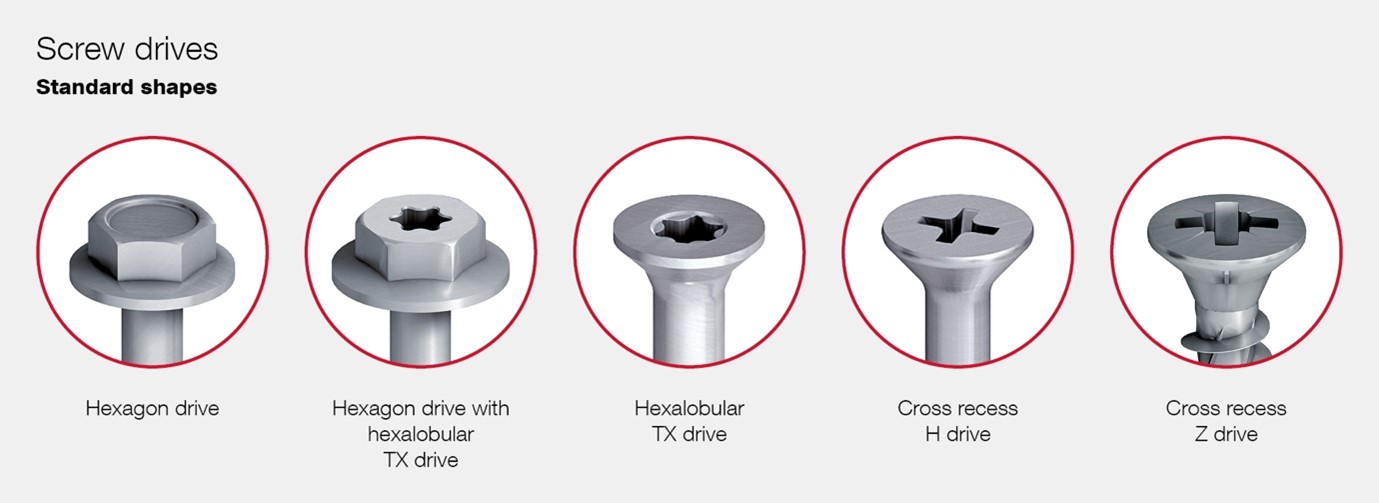
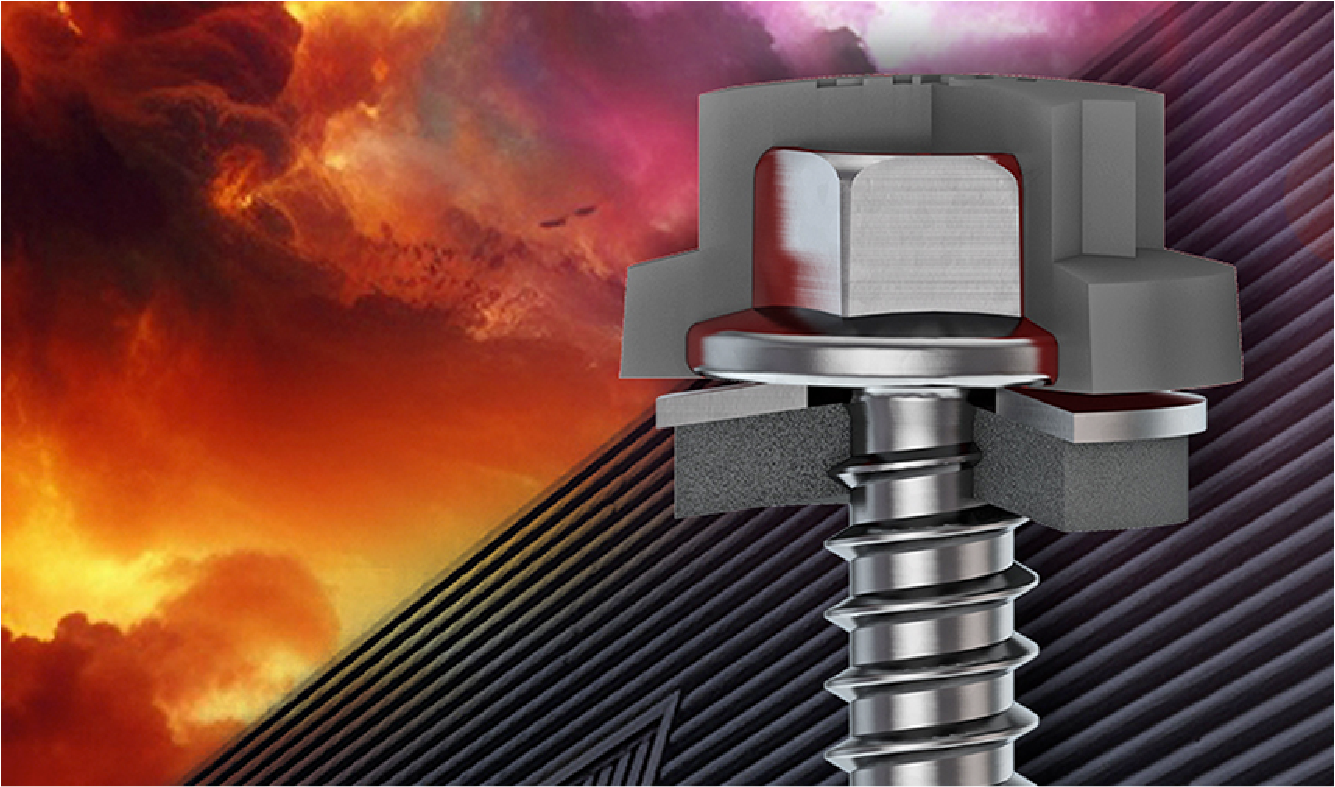
Colorfast head with external Bi-Hex drive
Colorfast is characterised by its colourful over-mould bi-hex head. This over-mould is manufactured of engineering grade nylon and provides complete encapsulation of the fastener's flanged metal hexagon head. This allows for a bi-hex torque to transmit directly for a positive and secure driving process. Perfect for roofing and cladding applications, these Colorfast fasteners offer long-lasting durability in challenging conditions.