
How do you determine the required anchor length and installation depth?
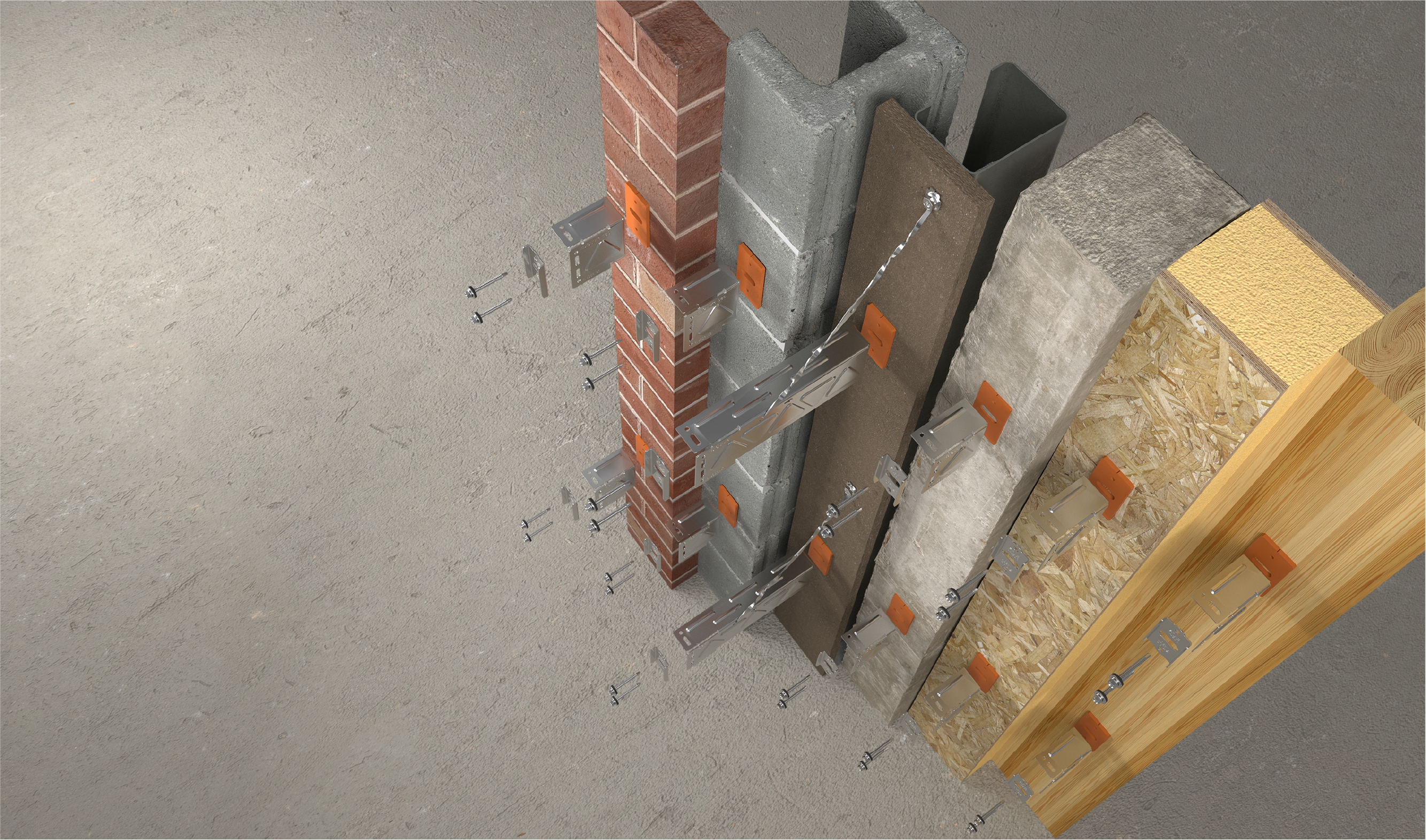
The EJOT plastic anchor, which is approved in Europe, is therefore always sold as a unit. To determine the necessary anchor length, it is important to know the thickness of the attachment to be fastened and the thickness of the non-load-bearing layer. Non-bearing layers could be, for example, render or an external thermal insulation composite system. Together, these two thicknesses give us the required clamping length. If you add the grip length and the installation depth together, you get the total length. The installation depth is marked on each anchor sleeve with a ring that runs all the way around it.
When should anchors be used in a single or grouped configuration?
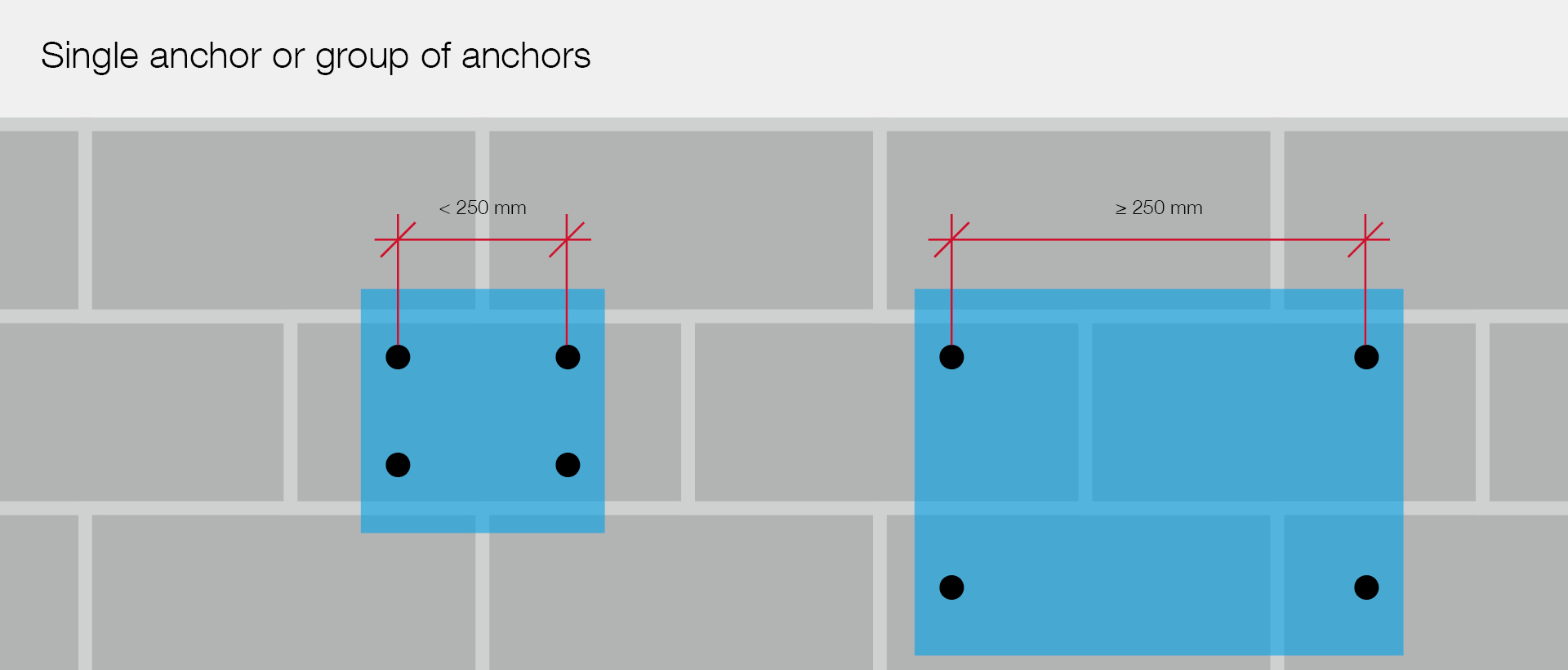
When using plastic anchors in masonry, the spacing between the anchors is of vital importance. If the centre distance between two anchors is less than 250 millimetres, it is deemed to be an anchor group. For anchor groups, only the load-bearing capacity of an individual anchor can be set. This regulation was created in order to exclude the extraction of stones from the masonry by excessive loads in a single stone. To be able to stress each anchor with its full characteristic load-bearing capacity, the anchors must have a spacing between each other of at least 250 mm. This ensures that the anchors can be embedded in different bricks.
The visibility of the joints is of decisive importance for anchoring in the masonry. If, for example, this is no longer possible due to a plaster layer or a heat insulation composite system, the load-carrying capacity must be reduced by 50%.