Self-Drilling Vs Self-Tapping: The Two Types of Screws in Industrial Lightweight Construction
The screw connection as a mechanical fastening solution is still the classic method for connecting components to one another. In the first part of our guide to self-drilling screws, we will give you a general overview of the different screw types, and you will learn more about the respective special features.
In the field of industrial lightweight construction, we basically differentiate between self-tapping (also called thread-cutting) and self-drilling screws. Let's take a closer look at the respective properties of these screw types:

Self-Tapping Screws
Self-tapping screws are screws assembled with sealing washers without drill points. Self-tapping screws seal the bore hole towards the outside and thus protect it from wetness. They are therefore mainly used in outdoor areas on facades or roofs. Since the screws do not have a drill point, a through hole must first be made in a previous work step. However, the thread is then formed automatically in the screwing process. This eliminates work steps and other tools, such as tap drills or fastening elements such as nuts.
Self-tapping screws are also differentiated according to whether they are fastened in timber or metallic/steel substructures. Depending on the substructure, they have different properties.
Self-Drilling Fasteners
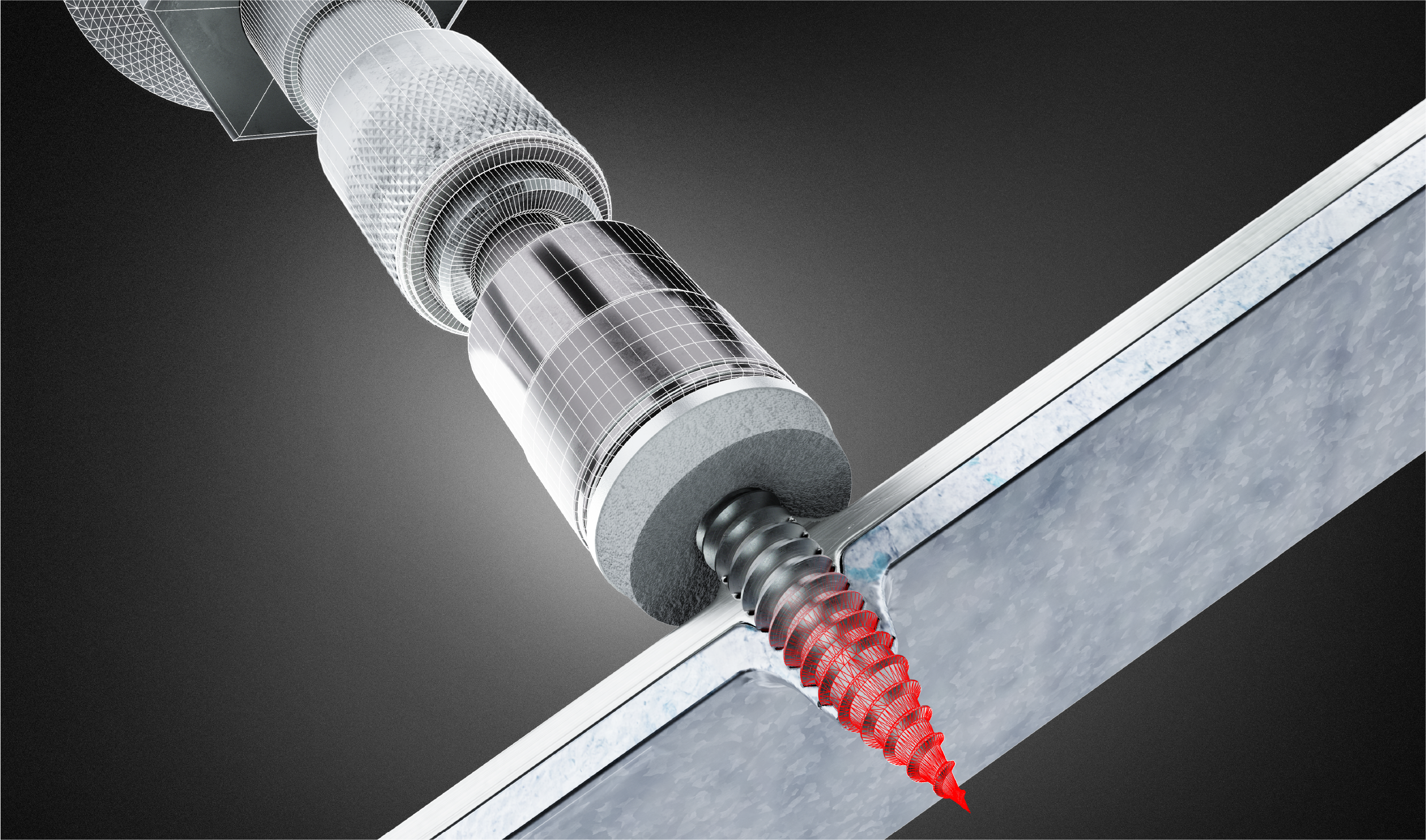
The classic self-drilling screws represent a further improvement of the screws assembled with sealing washers. Here, the thread-forming screws are combined with a cutting drill point. They are called self-drilling screws, as there is no need to pre-drill the substructure. Through hole, internal screw thread and fastening take place in just one work step.
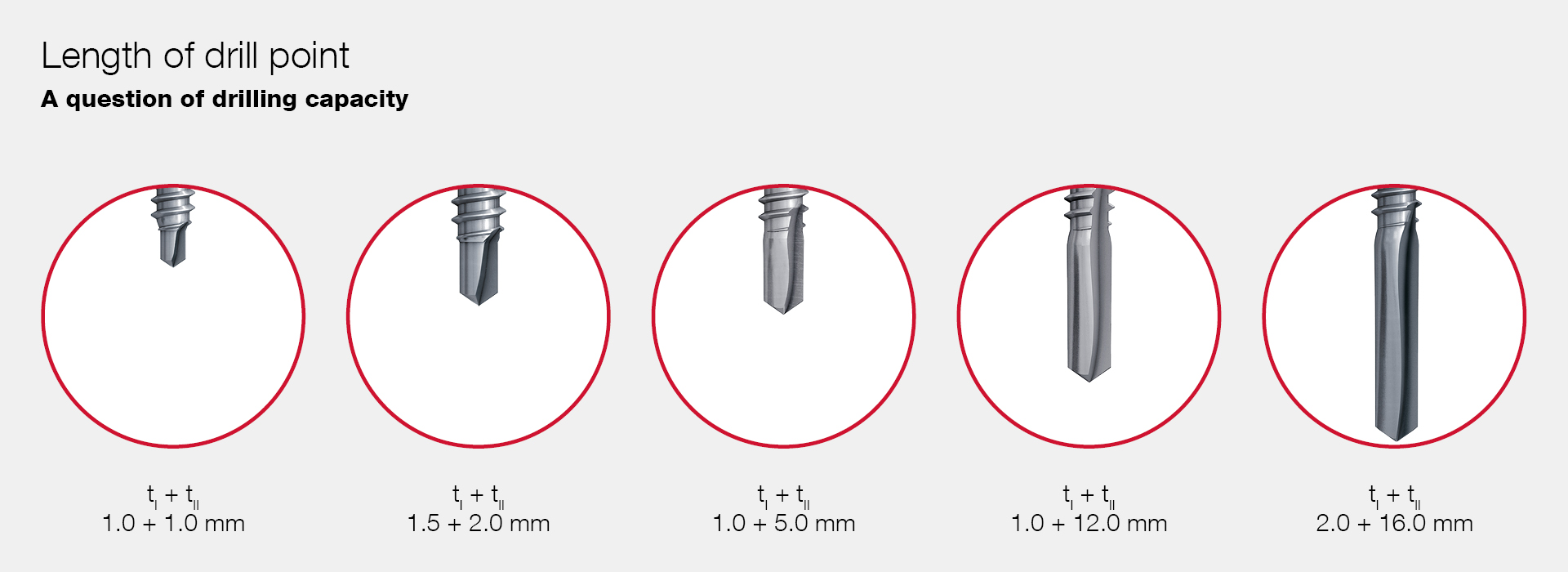
The classic self-drilling screws are suitable for parts made of different materials, such as steel or aluminium, depending on the screw material. In the building industry, they are used to fasten trapezoidal profiles and composite panels. There are both self-drilling screws with low drilling capacity (also called drilling performance) for thin sheet metal and screws with large drilling capacity, such as the EJOT JT3-18, which cut through thick substructures made of construction steel up to a thickness of 16 mm.