What’s the difference between fastening into timber and steel?
Fastening to timber substructures
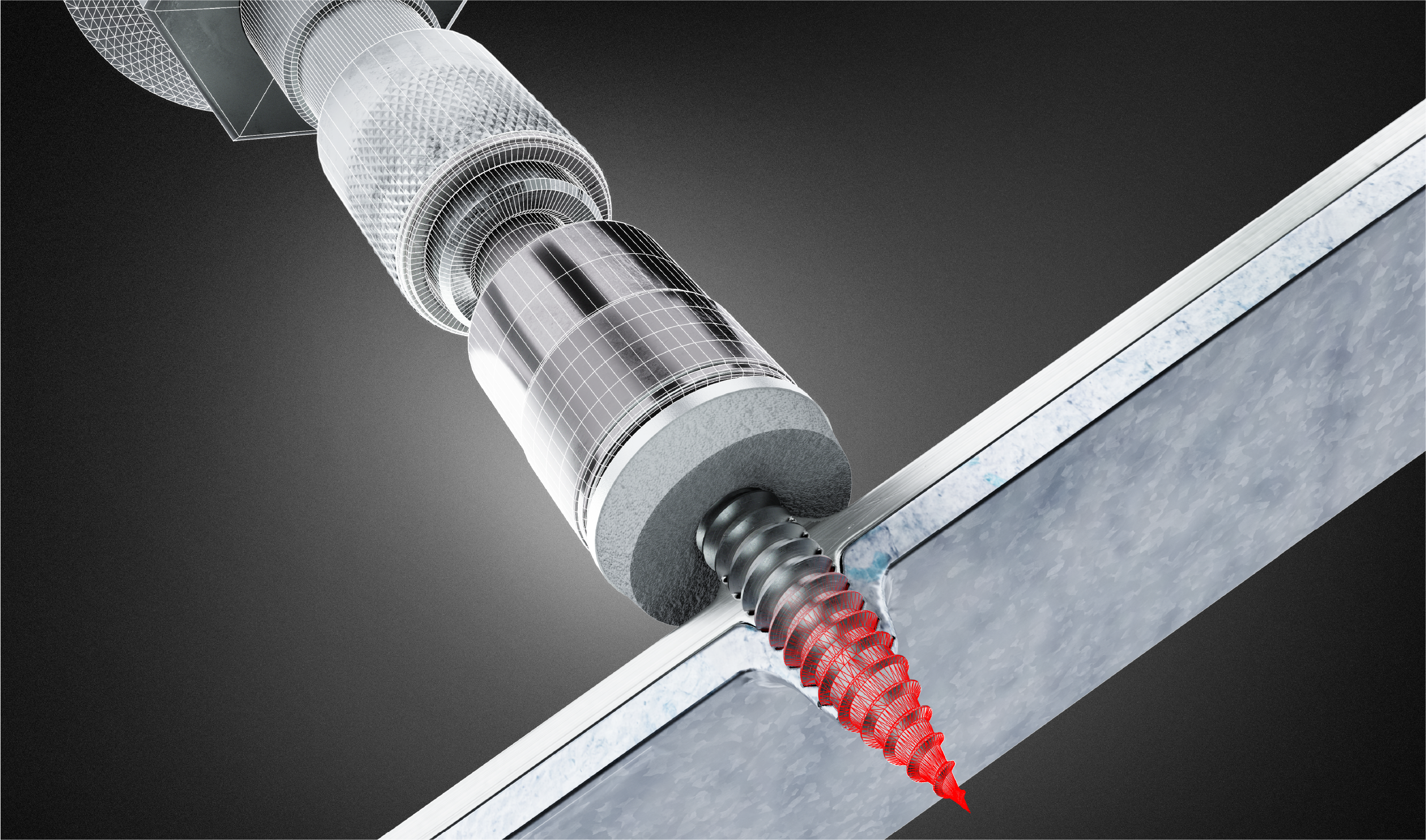
In order to achieve high load-bearing capacity values in timber, the screws have a coarse thread. This is characterized by a large pitch and a large depth of bevel in the thread geometry. EJOT screws from the JA series are an example of this.Fastening in steel substructures
For use in thicker steels, however, screws with a finer thread geometry are necessary in order to form a fine thread. The EJOT JZ3 screws can be named here as an example.In the case of fasteners for steel substructures, a distinction is also made between two "point styles". The JZ screws have a dog point at the bottom – that is, a dulled end – while the JB screws have a point. The latter are suitable for thinner steel substructures, as the point is better positioned in the pilot hole.