Germany’s Largest Vertical Garden: A Living Flagship in Moers
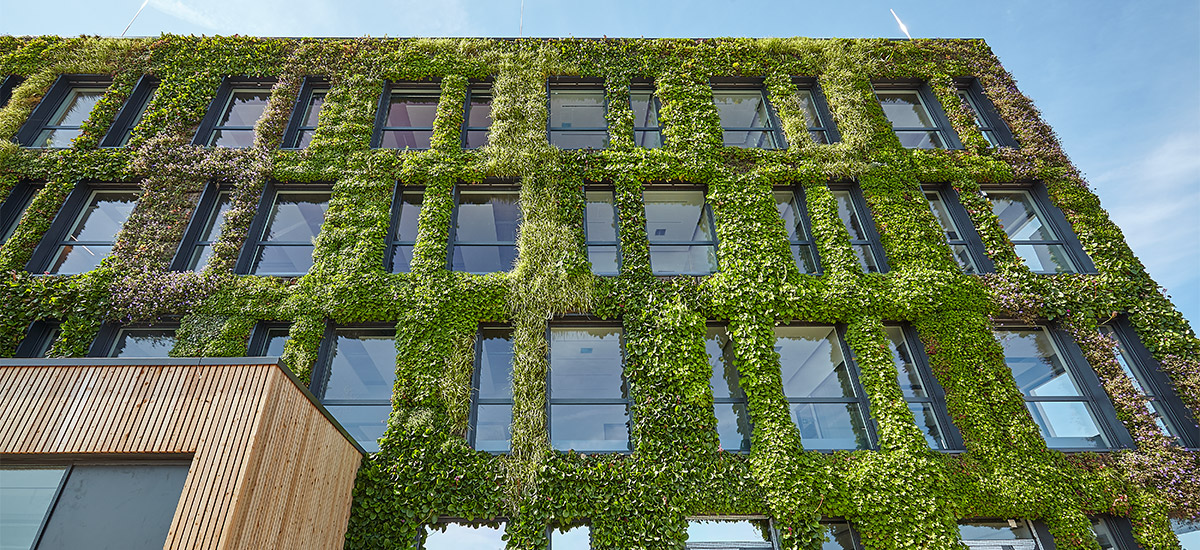
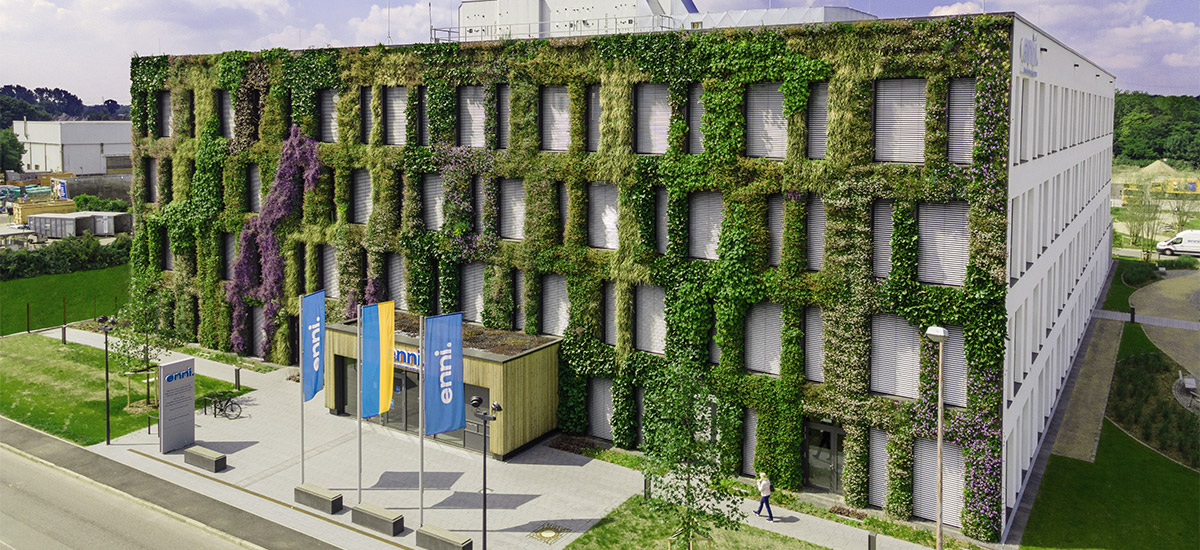
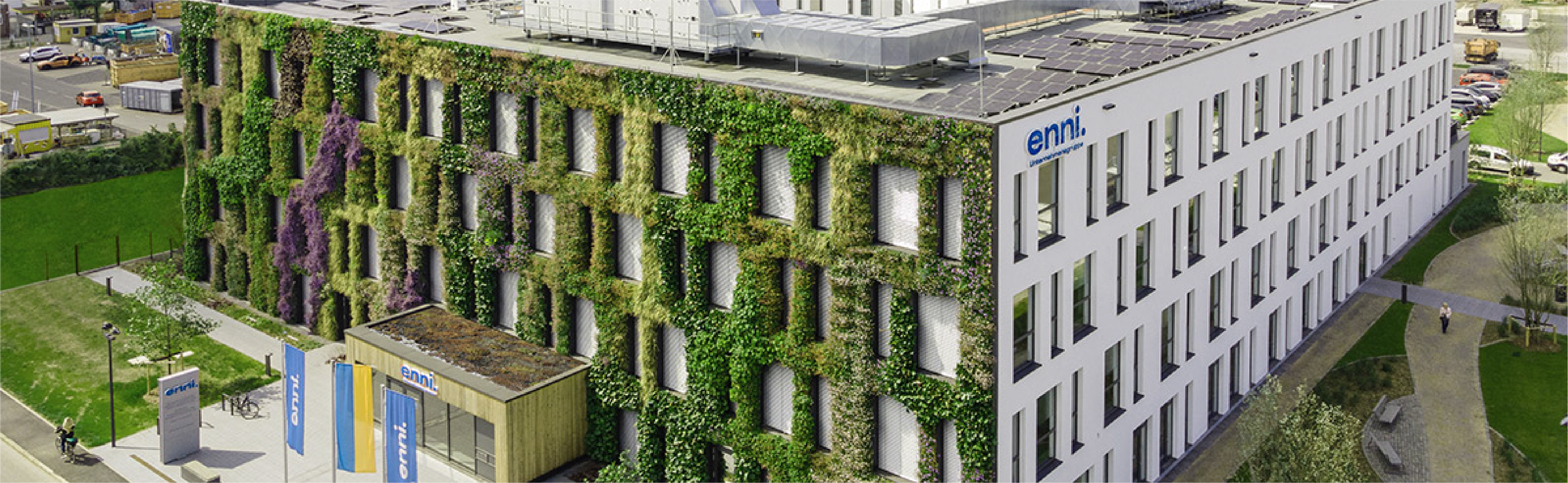
Rising from the Lower Rhine, the new administration building for ENNI Stadt & Service Niederrhein AöR is turning heads as a masterpiece of sustainable architecture. Completed in 2021, this Moers-based project boasts an east façade that stretches across a staggering 600 square meters, making it the largest vertical garden in Germany.
Far from a simple wall of ivy, this living ecosystem features approximately 56,000 individual plants seamlessly secured by the high-performance CROSSFIX® substructure system. With a vibrant, shifting palette of over 30 different flowering shrubs and grasses, the building does more than just catch the eye; it serves as a powerful testament to the visual, ecological, and practical potential of modern architectural greenery.
The Multi-Layered Benefits of Living Walls
The arguments for integrating nature into our built environment are both extensive and compelling. Vertical greening offers a brilliant workaround for dense urban areas where traditional ground-level parks are impossible due to space constraints. By utilising the vertical plane, cities can claw back vital green space.These living walls act as natural filters, trapping harmful pollutants and sustainably improving local air quality. They also serve as a building's natural thermostat:
- In Summer: The dense foliage shades the building fabric, significantly cooling the interior.
- In Winter: The system acts as an extra layer of insulation, trapping heat inside.
Beyond temperature control, the dense layers of plants absorb city noise to provide excellent acoustic insulation. Simultaneously, they create rich, vertical micro-habitats for birds and beneficial insects, wildlife that is tragically scarce in modern city centres. Yet, the benefits aren't purely environmental; the sheer aesthetic flexibility of these systems unlocks near-endless design possibilities for architects.
High-Tech Engineering Behind the Greenery
To bring the ENNI building to life, engineers utilised a wall-mounted greenery system, often referred to as a "living wall." One of the primary advantages of this method is immediacy: the specialised plant pockets arrive at the construction site fully pre-planted, instantly fulfilling the aesthetic vision upon installation. To keep the flora thriving, a state-of-the-art, app-controlled network of sensors and automated irrigation delivers precise care around the clock.However, an ecologically valuable, high-tech façade requires a backbone that can handle serious architectural demands. It must satisfy strict requirements regarding building physics, structural integrity, and fire protection.
This is where the CROSSFIX® substructure system proves its worth. Engineered from premium stainless steel, the system is exceptionally low in thermal bridges and offers massive load-bearing capacity alongside superior fire resistance.
Thanks to its unique bracket geometry, it provides the ultimate structural flexibility. This allowed the installers to adapt flawlessly to the building's specific geometry, easily navigating structural challenges like projections and wall apertures to create a flawless, living finish.