
How is a rainscreen facade constructed?
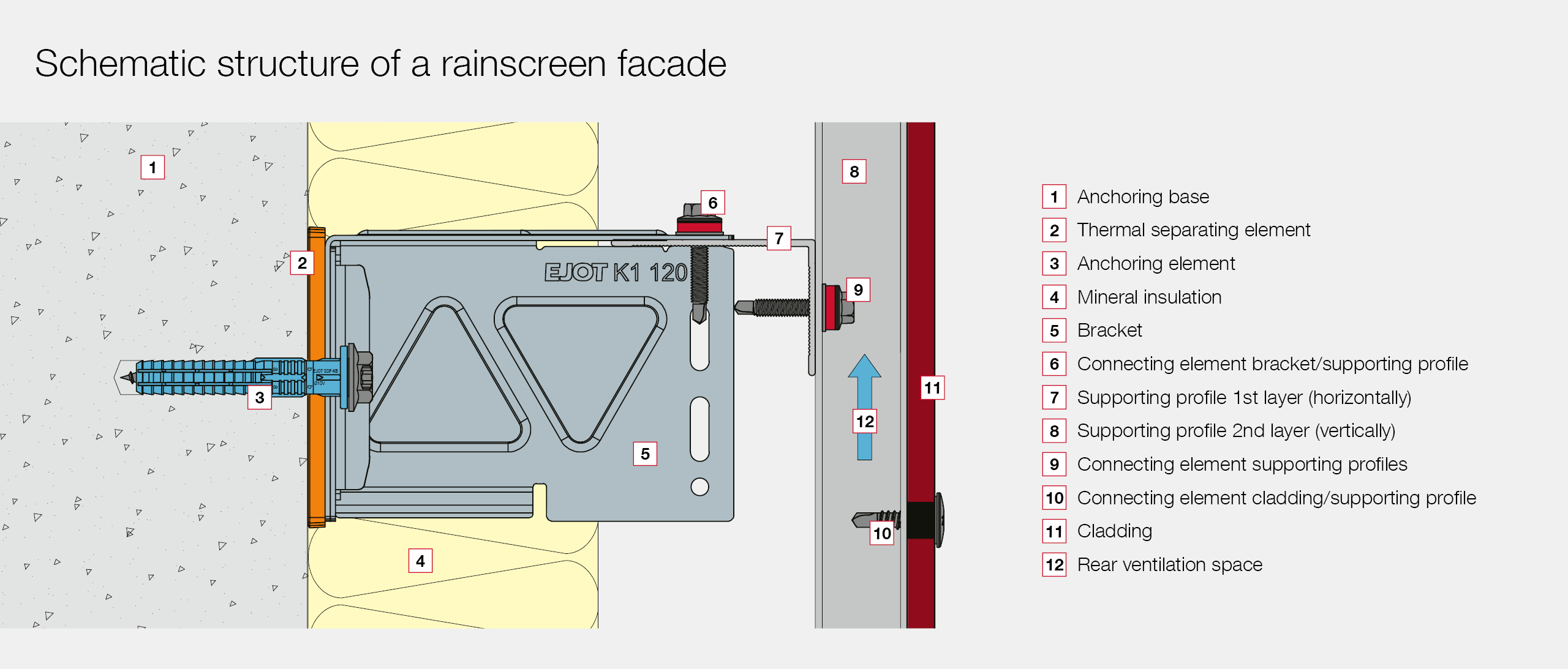
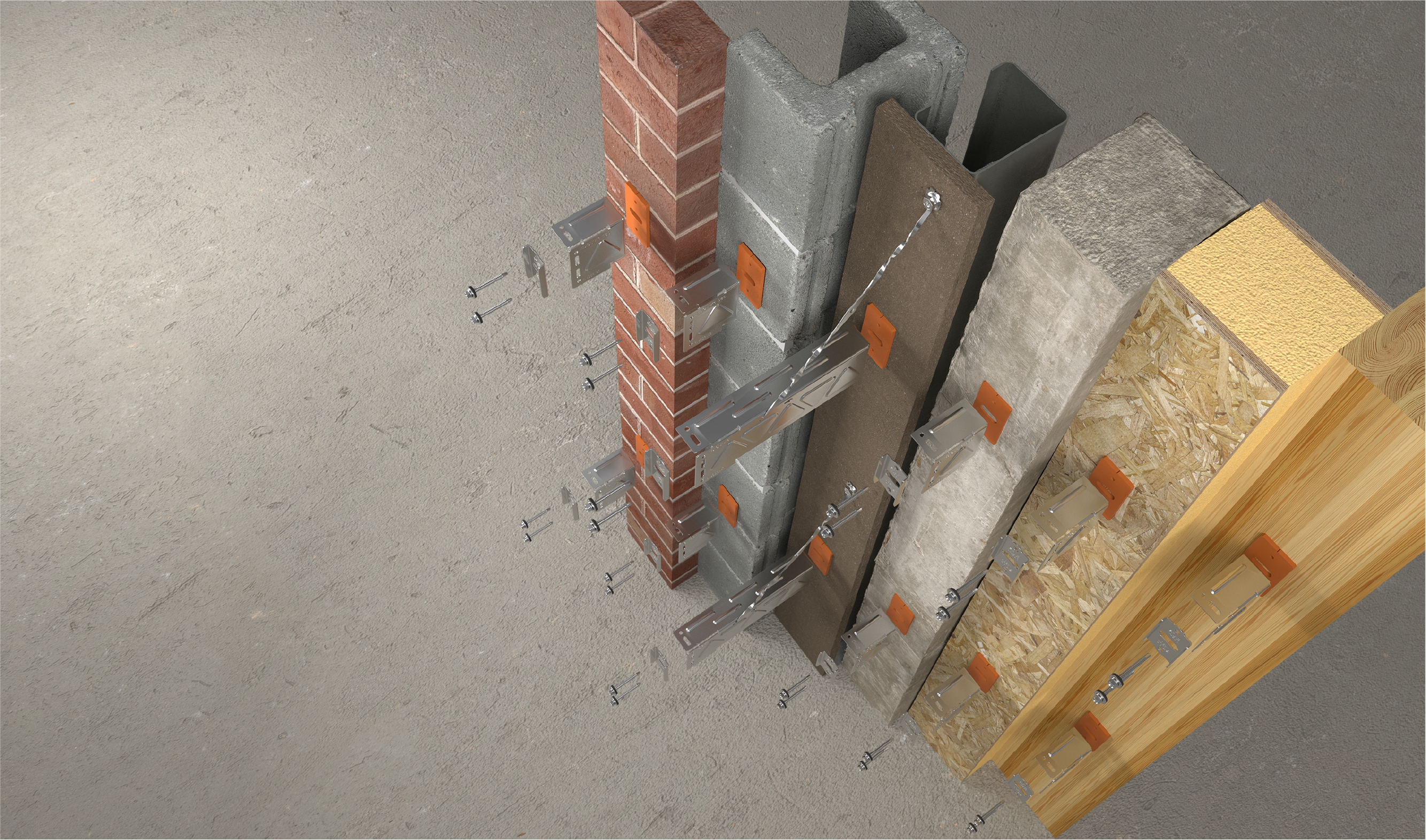
A rainscreen facade is made up of several layers. The wall brackets are attached to the first layer, the base material. It is particularly important to use a thermal separating element here between the wall and the bracket, in order to reduce thermal bridges in the system. Then mineral insulation is laid and attached with the aid of insulation support anchors.
Subsequently, the support profile is connected using fixed and sliding point screws and is slidable. Finally, the cladding material is fastened to the support profile. The rear ventilation gap created between the cladding material and the insulating material not only gives the rainscreen facade (also known as rear-ventilated facade) its name, but also adds key structural-physical advantages.
What are the design advantages of a rainscreen facade?
The almost endless design options available to builders and architects when using rainscreen facades are an excellent feature. In addition to even and rough surfaces, three-dimensional shapes, straight and curved lines as well as a wide variety of colours can be achieved with a rainscreen facade.