Corrosive Environments
Corrosion Handbook – Part 3
In the first two parts of the Corrosion guide, we dealt with the different types of corrosion and also looked closely at different ways of reducing corrosion damage.
In this part we will look at the assessment of the corrosion environment and explain the corrosivity categories and corrosion resistance classes.
In addition, it is particularly important to consider the corrosion resistance of the various materials. The appropriate fastening solution cannot be selected until these are known.
This is where the so-called corrosivity categories and corrosion resistance classes come in.
One of the most important standards for assessing environmental conditions under corrosive aspects is DIN EN ISO 12944-2. The standard divides the environmental conditions into six different corrosivity categories. These vary between low requirements for the indoor area to very high requirements for the outdoor area.
An overview of these corrosion classes and examples of the environments are given in the table below.
In this part we will look at the assessment of the corrosion environment and explain the corrosivity categories and corrosion resistance classes.
Requirements for corrosion protection with regard to the environment and the material
In order to meet the respective requirements for corrosion protection in a building project, the expected level of exposure to corrosion for a building or an individual component must be reviewed beforehand. For example, the exposure to corrosion is much higher in environments with seawater or in the chloride-containing environment of swimming pools than in other areas.In addition, it is particularly important to consider the corrosion resistance of the various materials. The appropriate fastening solution cannot be selected until these are known.
This is where the so-called corrosivity categories and corrosion resistance classes come in.
Assessment of the environment – Corrosivity categories (DIN EN ISO 12944-2)
Various European and international standards are available to us in order to assess which exposure to corrosion is to be expected and then select the suitable materials.One of the most important standards for assessing environmental conditions under corrosive aspects is DIN EN ISO 12944-2. The standard divides the environmental conditions into six different corrosivity categories. These vary between low requirements for the indoor area to very high requirements for the outdoor area.
An overview of these corrosion classes and examples of the environments are given in the table below.
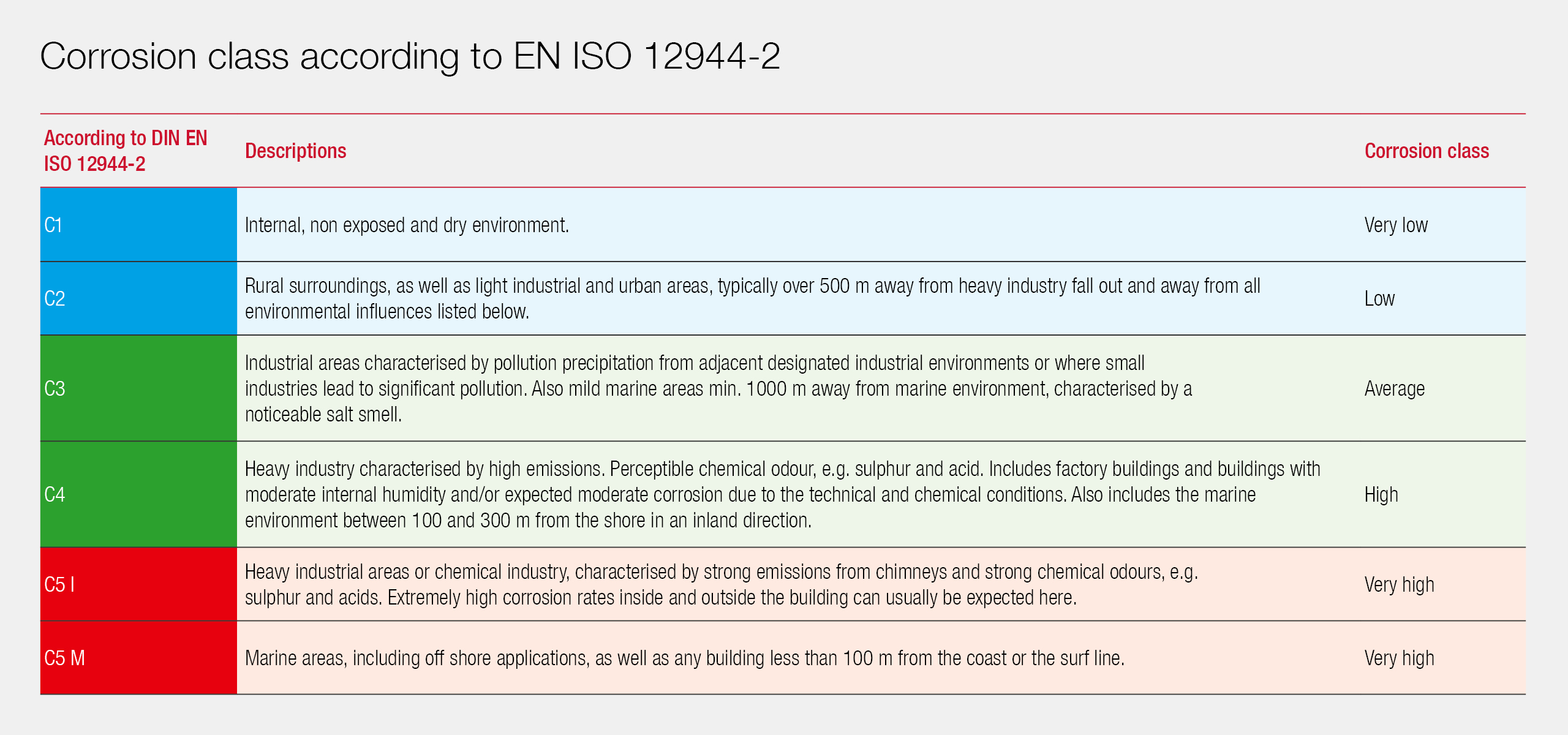
Both assessment documents "European Assessment Documents" (EAD) 330046-01-0602 and 330047-01-0602 require the use of stainless steels for corrosivity categories ≥ C2. In industrial lightweight construction, they form the test basis for all European Technical Assessments on the market.
The assignment of a steel component to a corrosivity category determines what type and how strong the corrosion-relevant influences from the environment are on the component. Based on this, we can select the right material or determine the type and extent of the required corrosion protection measures.
In order to determine the respective CRC corrosion resistance class, a corrosion resistance factor (CRF) must first be determined. The CRF depends on the corrosiveness of the respective environment and can be calculated using the following formula:
CRF = F1 + F2 + F3
F1: Risk of exposure to chlorides
F2: Risk of exposure to sulphur dioxide
F3: Cleaning concept and exposure to washing away the construction due to rain
Depending on the given condition, the CRF value may range between 1 and < -20. A CRC corrosion resistance class is then assigned to the determined CRF. A list of the possible corrosion resistance classes and the assignment to the corrosion resistance factors can be found in the table below.
The assignment of a steel component to a corrosivity category determines what type and how strong the corrosion-relevant influences from the environment are on the component. Based on this, we can select the right material or determine the type and extent of the required corrosion protection measures.
Selection of the material – Corrosion resistance classes
To make it easier to classify stainless steels in terms of their corrosion resistance and to select the materials appropriately, five different corrosion resistance classes (CRC) have been defined for the construction of steel structures:- CRC I: low
- CRC II: moderate
- CRC III: medium
- CRC IV: strong
- CRC V: very strong
The calculation of the resistance classes
In order to determine the respective CRC corrosion resistance class, a corrosion resistance factor (CRF) must first be determined. The CRF depends on the corrosiveness of the respective environment and can be calculated using the following formula:CRF = F1 + F2 + F3
F1: Risk of exposure to chlorides
F2: Risk of exposure to sulphur dioxide
F3: Cleaning concept and exposure to washing away the construction due to rain
Depending on the given condition, the CRF value may range between 1 and < -20. A CRC corrosion resistance class is then assigned to the determined CRF. A list of the possible corrosion resistance classes and the assignment to the corrosion resistance factors can be found in the table below.
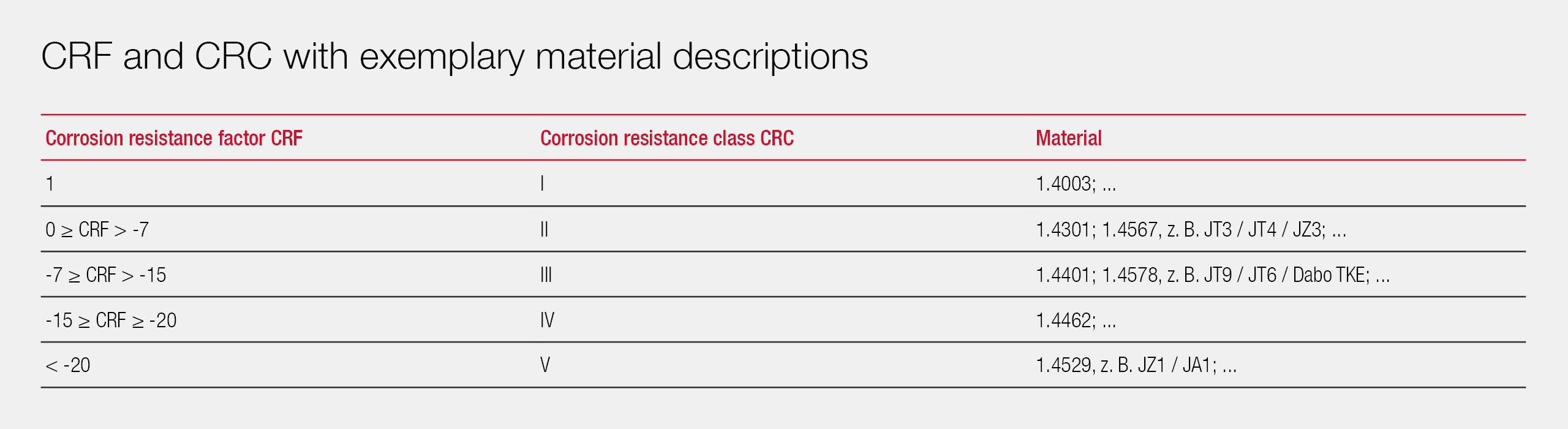
This assignment results in a different selection of materials for indoor and outdoor areas, depending on the environmental conditions. The figure shows a schematic selection of materials for different environmental conditions.
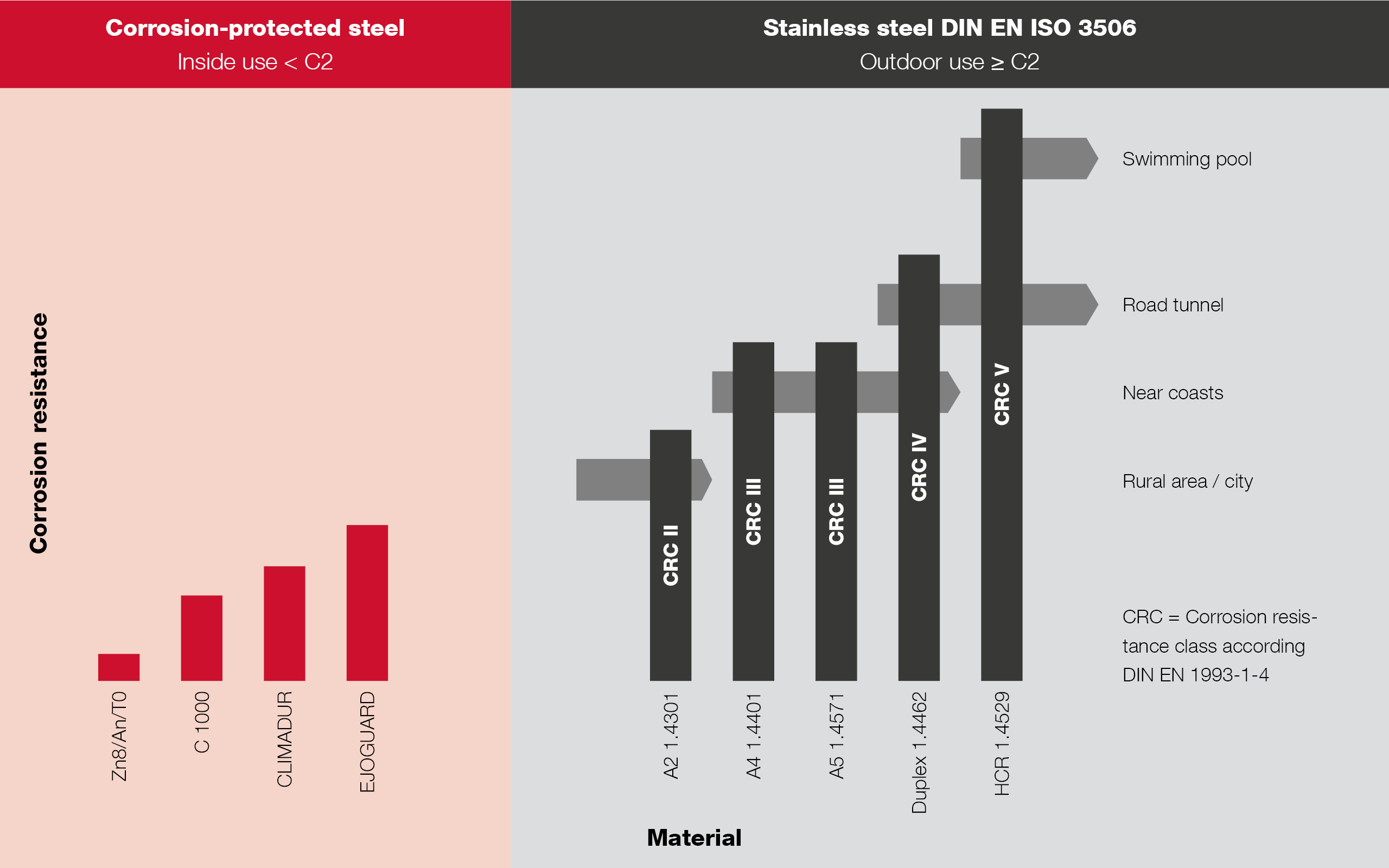
The corrosion resistance classes are determined with the help of a corrosion resistance factor and indicate the resistance of components and products to external influences and environmental conditions. If we know which environmental conditions exist with regard to corrosion based on the corrosivity category, we can select the suitable material accordingly.
In accordance with DIN EN ISO 1993-1-4, at least one material of corrosion resistance class II (stainless steel A2) must be used for fasteners that are used in weathered outdoor areas, for example. Depending on national regulations, screws with duplex coatings, such as the EJOGUARD, can also be used.
Corrosion is an important issue, particularly in the construction industry, and can have serious consequences. In the Corrosion guide, we looked at the different types of corrosion and got to know different ways in which corrosion can be avoided to the greatest extent possible. In the last part, we also looked at the assessment of the corrosion environment and the corrosion resistance of the materials, so that you now have a comprehensive overview of the topic for your future projects. Please do not hesitate to contact us if you have questions!
In accordance with DIN EN ISO 1993-1-4, at least one material of corrosion resistance class II (stainless steel A2) must be used for fasteners that are used in weathered outdoor areas, for example. Depending on national regulations, screws with duplex coatings, such as the EJOGUARD, can also be used.