
Testing Capability Is the Foundation of Real Compliance
Compliance doesn’t start with a certificate; it starts with testing. Behind every approval lies a systematic verification process, where products are subjected to load, stress, corrosion, and environmental influences to ensure they perform as intended. The quality and reliability of these tests form the backbone of our trusted compliance.
In-House Testing as a Driver of Product Development
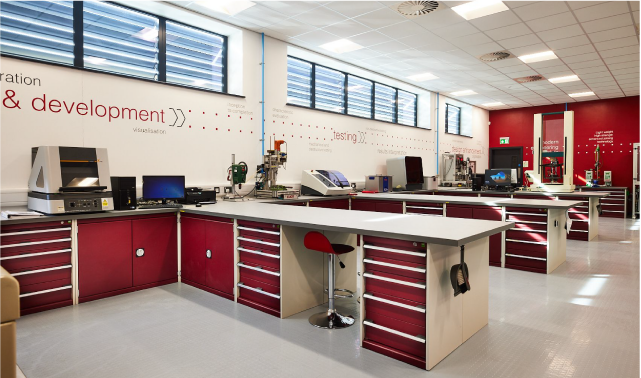
Having in-house testing capability fundamentally changes how compliance is achieved. Products can be evaluated, understood, and improved long before they are submitted for formal approval.Performance limits are identified early, design improvements can be validated quickly, and questions are answered based on data rather than assumptions. This proactive approach reduces risks and ensures that products are optimised for both quality and reliability.
Internal laboratories also give engineering teams the freedom to act fast. When testing is done in-house, development isn’t delayed by external schedules. Engineering teams can respond faster to new requirements, customer needs, or project-specific challenges. This shortens development cycles and ensures that compliance keeps pace with innovation, keeping products competitive and reliable.
Accredited testing facilities add another essential dimension. They ensure that testing is not only technically precise but also formally recognised. Accredited results can be used directly in approval processes, supporting European Technical Assessments and other certifications.
This creates confidence for regulators, approval bodies, and customers that the data behind the product meets the highest standards of reliability and traceability.
Building Knowledge Through Testing
Testing capability creates more than results; it creates knowledge. Over time, this builds a comprehensive technical foundation. It allows performance to be predicted more accurately, even in new or demanding applications. It enables meaningful technical support, based on evidence and experience rather than theory alone.Standards and regulations are constantly evolving. New requirements emerge as construction methods advance and expectations for safety, durability, and sustainability increase. Being directly involved in testing provides early visibility of these changes.
It allows products to be prepared in advance, rather than adjusted after requirements have already shifted. This benefits customers in a very practical way. Products developed with future standards in mind remain suitable for longer. They provide investment security and reduce the risk of future compliance limitations.
Proven Performance for Real-World Applications
Testing capability supports compliance at every level. It enables accurate assessment, supports formal approvals, and strengthens product development. It ensures that compliance is not treated as a final step, but as an integral part of engineering.Most importantly, it ensures that when a product is approved, it is not simply compliant on paper. It is compliant by proven performance, understood in detail, and prepared for the demands of real-world applications.