

What Loads and Forces Affect Flat Roof Performance?
In general, there is a differentiation between constantly applicable loads and not constantly applicable loads, i.e. variable loads.
Permanent Loads on Flat Roof Structures
The constantly applicable loads comprise the dead load of the construction, as well as components permanently connected with the roof such as solar installations, for example.
Variable Loads Including Wind, Snow and Foot Traffic
Non-constantly applicable loads are divided into wind loads from wind suction and wind pressure, traffic loads from people or vehicles, snow loads, repair loads due to maintenance work and loads from heat, expansion, or vibrations.
How Wind Uplift Affects Flat Roof Fastening Systems
As part of the mechanical fastening of flat roofs, the wind suction stress is decisive. In case of wind suction, the role of mechanical fastenings is to secure the position of the whole roof package.
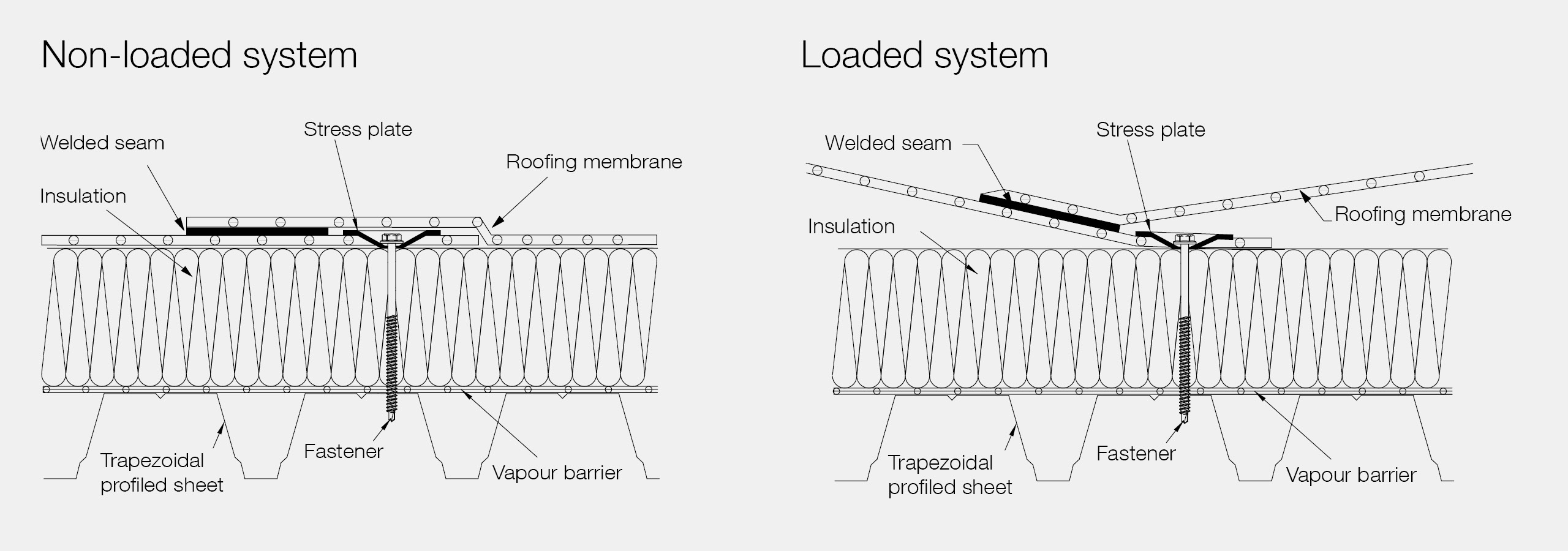
Using the example of seam fastening, a non-loaded and a loaded system are shown. Loaded roof systems can be recognised in the way the roofing membrane bulges upwards due to the wind suction stress.
How Mechanical Fasteners Transfer Wind Loads
This causes stress to be applied in the seam area. The wind suction forces are absorbed equally (50%) by the seam area and are transmitted via the fastener into the load-carrying system.
The load from both sides of the roofing membrane is transferred via the fastener to the supporting structure.
Why Do Flat Roof Membranes Need to Be Secured Against Wind Uplift?
Roofing membranes and the associated layers must be secured from becoming detached due to strong winds. This is set out in "Technical regulations for roofs with watertight sealing – Pitched roof guidelines". The specifications in DIN EN 1991-1-4:2010-12 "Actions on structures – General actions – Wind actions" must also be taken into account.