What is the correct speed for installing self-drilling fasteners?
Tool Speed for Self-Drilling Screw Installation
Self-drilling screws have the advantage that they can be processed particularly quickly, as there is no need to pre-drill.Determining the Correct Speed for Self-Drilling Screws
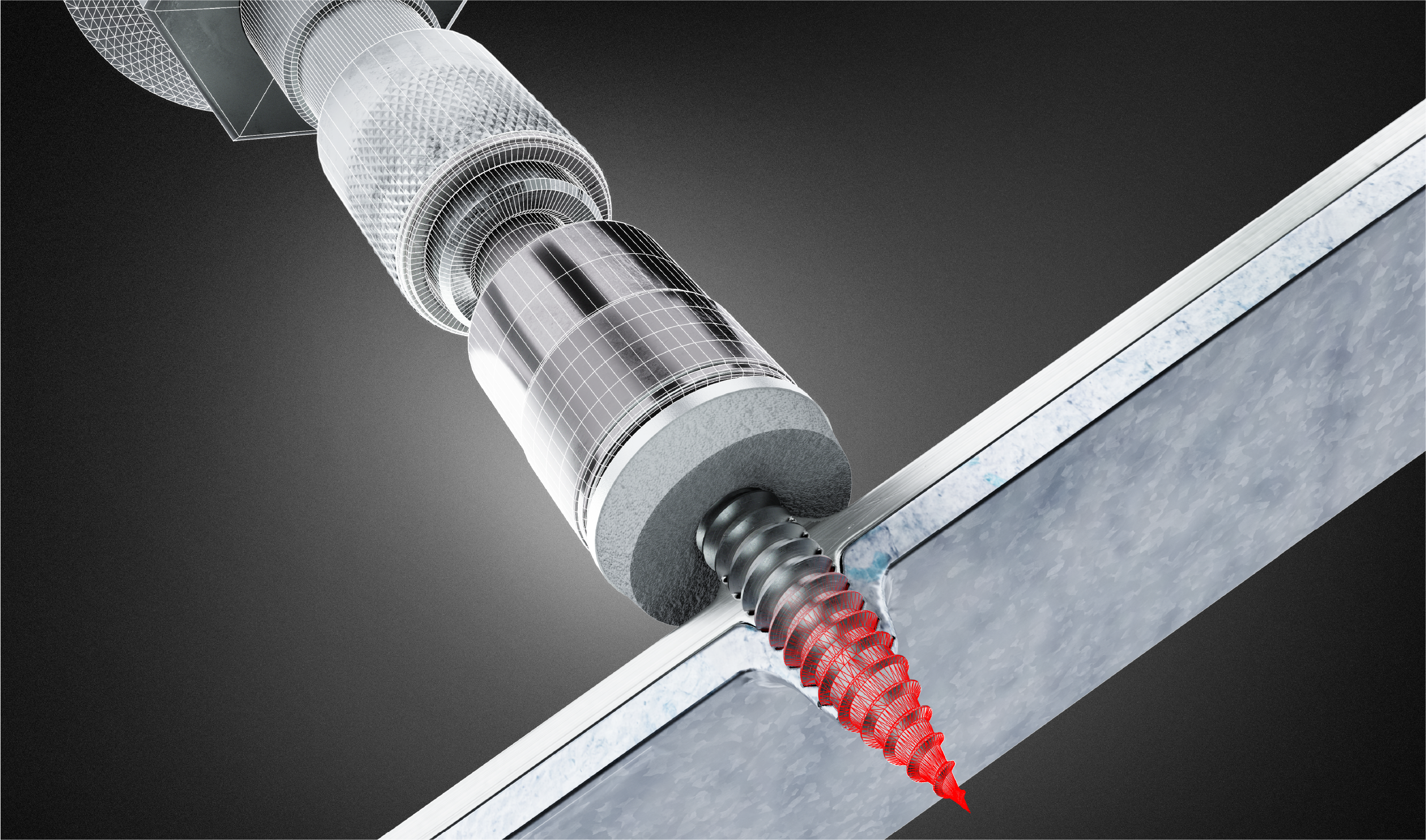
The correct speed depends on the type of screw. As a rule of thumb:- The smaller the screw diameter, the higher the speed and the lower the contact pressure.
- Larger screw diameters, on the other hand, are processed at a lower speed and higher contact pressure.
This helps ensure the drill tip penetrates efficiently while the thread is formed correctly.
Risks of Incorrect Speed
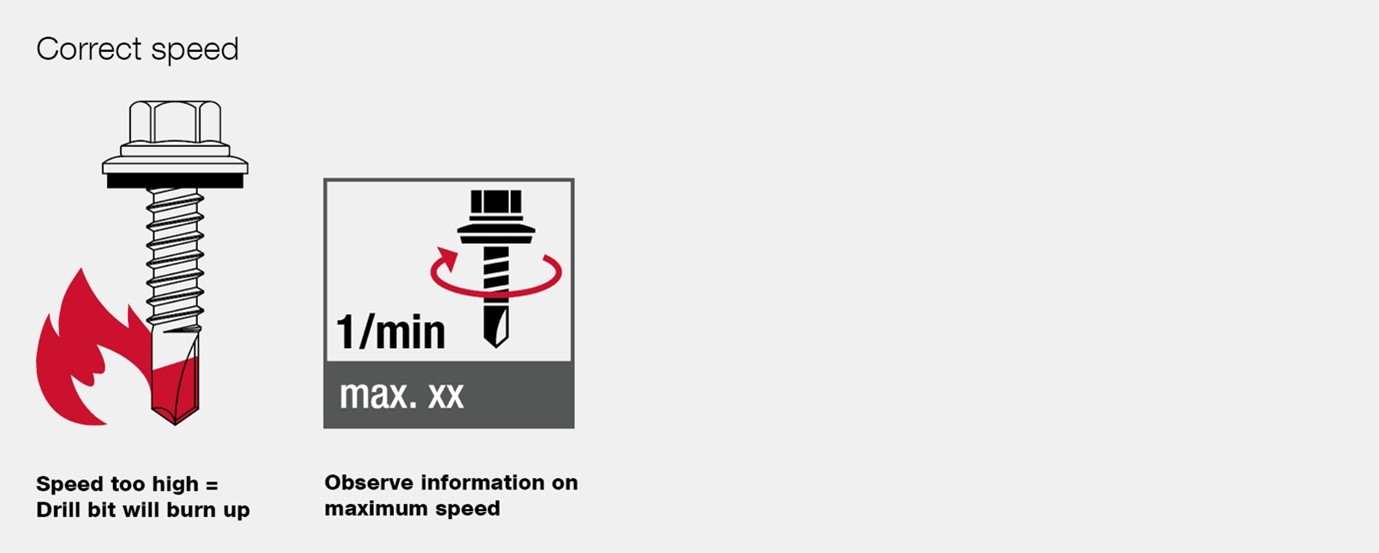
If the selected speed is too high, there is a risk that the drill bit will burn up and become unusable. If the speed is too low, chip removal cannot be guaranteed. The screw becomes clogged, the time required for assembly increases, or, in the worst case, assembly cannot be carried out at all.