Anchor Marks - and how to avoid them.
ETICS Expert Tip – Part 1
For decades, external thermal insulation composite systems have been one of the most efficient and durable ways of optimizing the energy performance of the building envelope. The fact that the ''energy-saving facades'' have stood the test of time is due in large part to the ETICS washer anchor. And yet, in many places, you still see ugly patterns of light and dark spots on ETICS facades, also known as ''anchor marks''. A nuisance for residents, but also for contractors and specifiers.
The orientation of the facade describes the position of the building or the orientation of the facade surfaces. Often, the occurrence of anchor marks depends on the side from which the solar radiation hits the facade or how strongly the surfaces are affected by the weather, i.e. rainfall or humidity (so-called hygric influences). Permanently damp as well as north-facing facade surfaces, which often suffer from more severe outdoor exposure, are particularly susceptible to soiling and marks. The immediate vicinity of agricultural land, water bodies and biotopes also favors the occurrence of anchor marks.
The extent of possible anchor marks is also always related to the selected render coating in the ETICS. There are many different types of renders that can be used. Depending on the type and thickness, the render can store moisture through its properties and also release it again in a targeted manner. The more evenly these moisture and drying processes take place, the less it will affect the soiling of the facade.
The Chi value, on the other hand, describes the point thermal conductivity (also called thermal bridge) of, among other things, anchors in the ETICS system. As a general rule: the higher the Chi value, the greater the point heat transfer. This can also have an influence on the formation of anchor marks. As a result of the difference in thermal conduction, the render coating dries faster above the anchor washers than on the rest of the facade, which can later support the appearance of anchor marks.
Render and anchor have different heat storage capacities. As a general rule: the greater the specific heat capacity of a building material, the slower it heats up. The means that the plastic washer of the anchor, for example, has a specific heat capacity more than twice as high as that of the render.
Therefore, it is easy to see that several factors can influence the formation of anchor marks. In general, they always appear as light or dark spots on facades.
What are anchor marks?
Anchor marks are temporary or permanent spots on a thermally insulated and rendered facade which become visible as darker or lighter spots above the anchor washer on the facade itself. This defect occurs regardless of the insulation material used. Although it does not impair the functioning of the ETIC system, it increases with the age of the facade and becomes more and more of a visual nuisance.Causes of anchor marks
The development of anchor marks can have several causes, such as the location of the building, the orientation of the facade surface or the thermal bridge (Chi valve) of the anchor. Different heat storage capacities of the components used (insulation boards, anchors, render) and incorrect setting positions of the anchors can also lead to the marks.The orientation of the facade describes the position of the building or the orientation of the facade surfaces. Often, the occurrence of anchor marks depends on the side from which the solar radiation hits the facade or how strongly the surfaces are affected by the weather, i.e. rainfall or humidity (so-called hygric influences). Permanently damp as well as north-facing facade surfaces, which often suffer from more severe outdoor exposure, are particularly susceptible to soiling and marks. The immediate vicinity of agricultural land, water bodies and biotopes also favors the occurrence of anchor marks.
The extent of possible anchor marks is also always related to the selected render coating in the ETICS. There are many different types of renders that can be used. Depending on the type and thickness, the render can store moisture through its properties and also release it again in a targeted manner. The more evenly these moisture and drying processes take place, the less it will affect the soiling of the facade.
The Chi value, on the other hand, describes the point thermal conductivity (also called thermal bridge) of, among other things, anchors in the ETICS system. As a general rule: the higher the Chi value, the greater the point heat transfer. This can also have an influence on the formation of anchor marks. As a result of the difference in thermal conduction, the render coating dries faster above the anchor washers than on the rest of the facade, which can later support the appearance of anchor marks.
Render and anchor have different heat storage capacities. As a general rule: the greater the specific heat capacity of a building material, the slower it heats up. The means that the plastic washer of the anchor, for example, has a specific heat capacity more than twice as high as that of the render.
Therefore, it is easy to see that several factors can influence the formation of anchor marks. In general, they always appear as light or dark spots on facades.
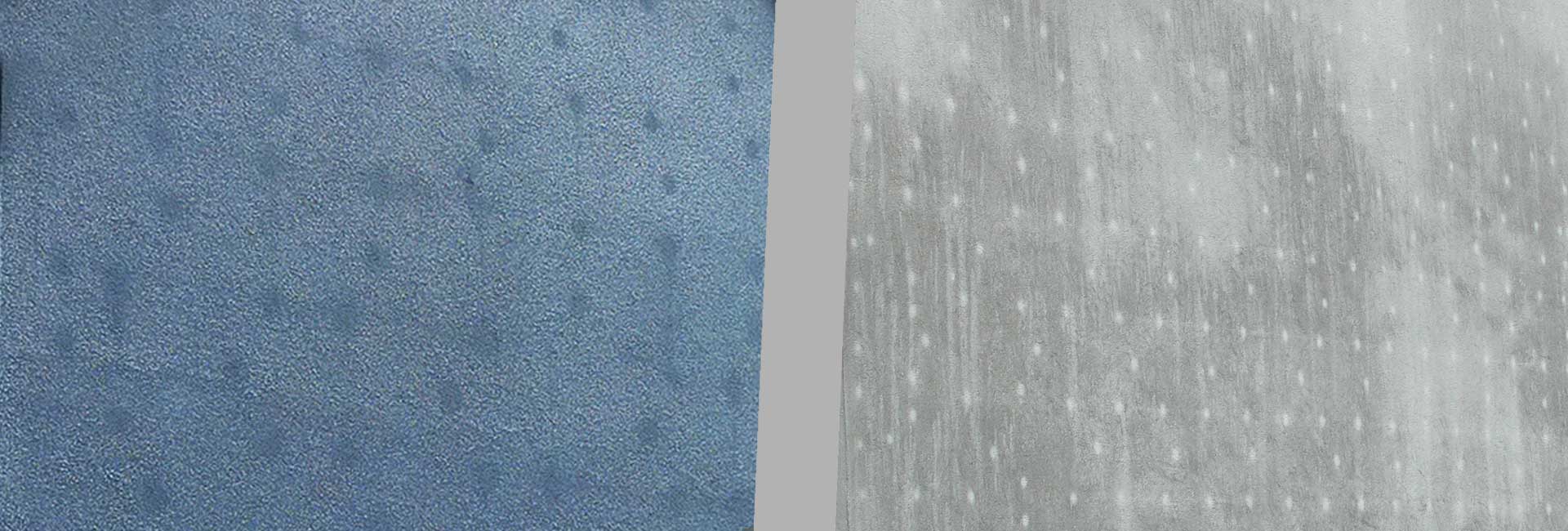
When are the spots light, when are they dark?
The dark spots in the area of the anchor washers usually result from anchors that are set too deep, in an unprofessional manner. They are filled or rendered after installation. The resulting thicker render layers over the anchors means that the facade dries more slowly in these areas, meaning it remains moist longer. This allows dirt, algae and fungi to accumulate better. At these points, clearly visible dark discolorations then form on the facade.The lighter spots, on the other hand, are usually the result of different heat storage capacities or thermal conductivities of the components. The combination of anchor washer and render coating stores the heat longer than the undisturbed render surface. This area dries faster. The remaining surface of the facade stays moist longer and in turn collects dirt for a longer period – the area above the anchor washers stays bright. In the long term, the anchors become visible as light spots on the facade surface.
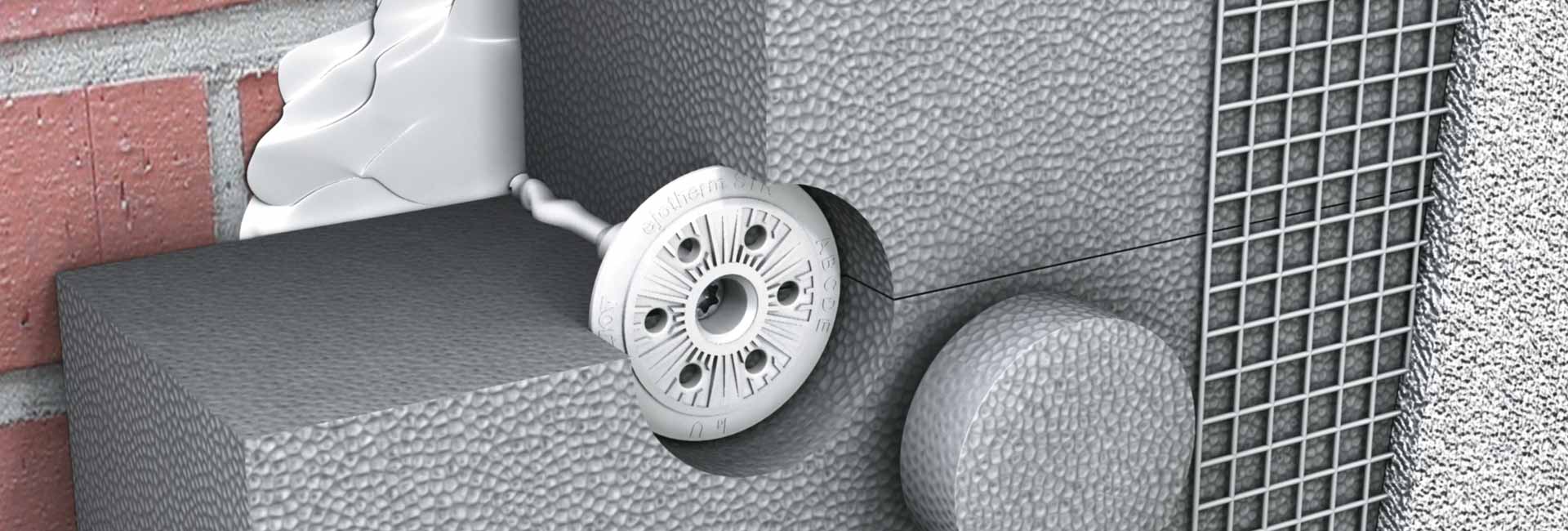
Installation Best Practice
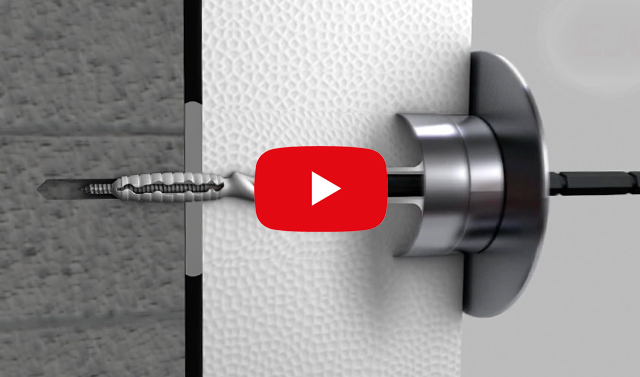
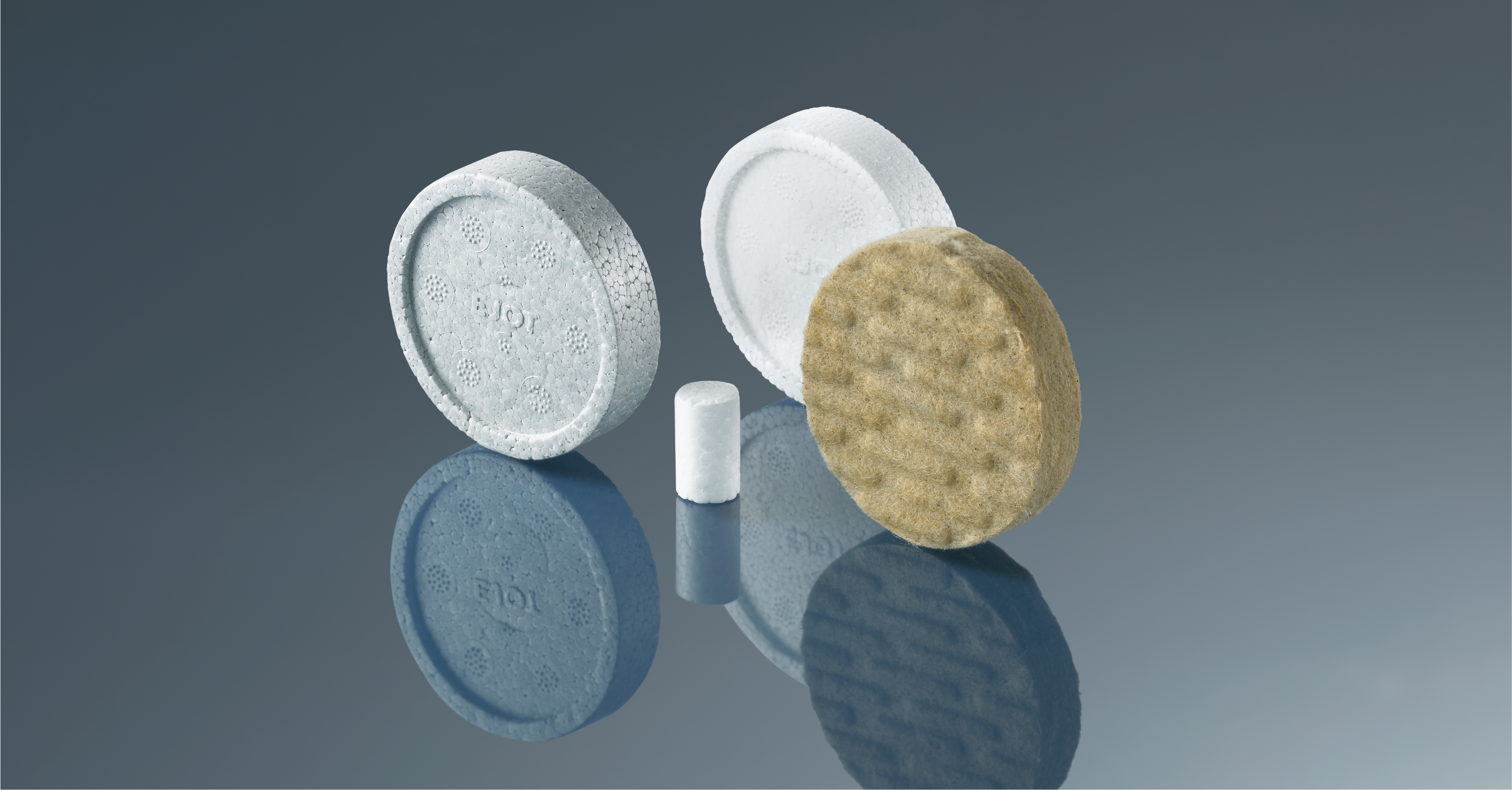
You can effectively prevent anchor marks, simply by following this best practice guide. By using the specially designed STR tool 2GE installation tool, the anchors are installed and recessed into the insulation material in a controlled manner. The area around the anchor washer is cut with the installation tool and the insulation material is automatically compressed under the washer when the anchor is screwed in. Then an insulating cap is simply inserted flush into the recess between the anchor washer and the facade surface. This way, a homogenous installation surface is achieved. Watch our short film.The surface, which is now even again, enables an even application of the render so that all reworking in the anchor areas that have not been optimally placed is no longer necessary. In addition, the temperature differences on the surface of the insulation board are minimised by the attached insulating material cap and the heat storage capacity is equalised over the entire surface. This way, an even and undisturbed exchange of moisture between render and insulating material can be permanently ensured.
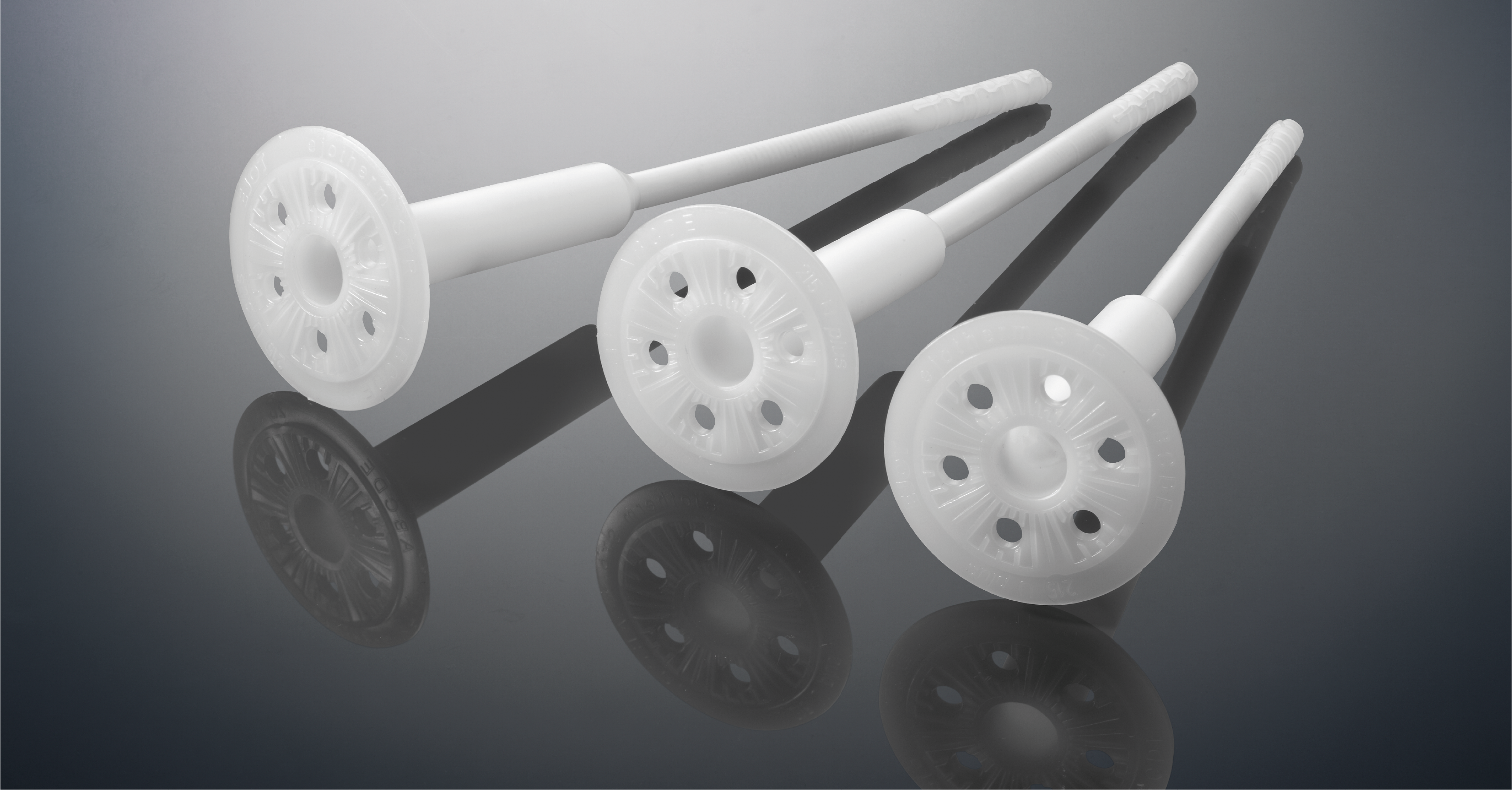
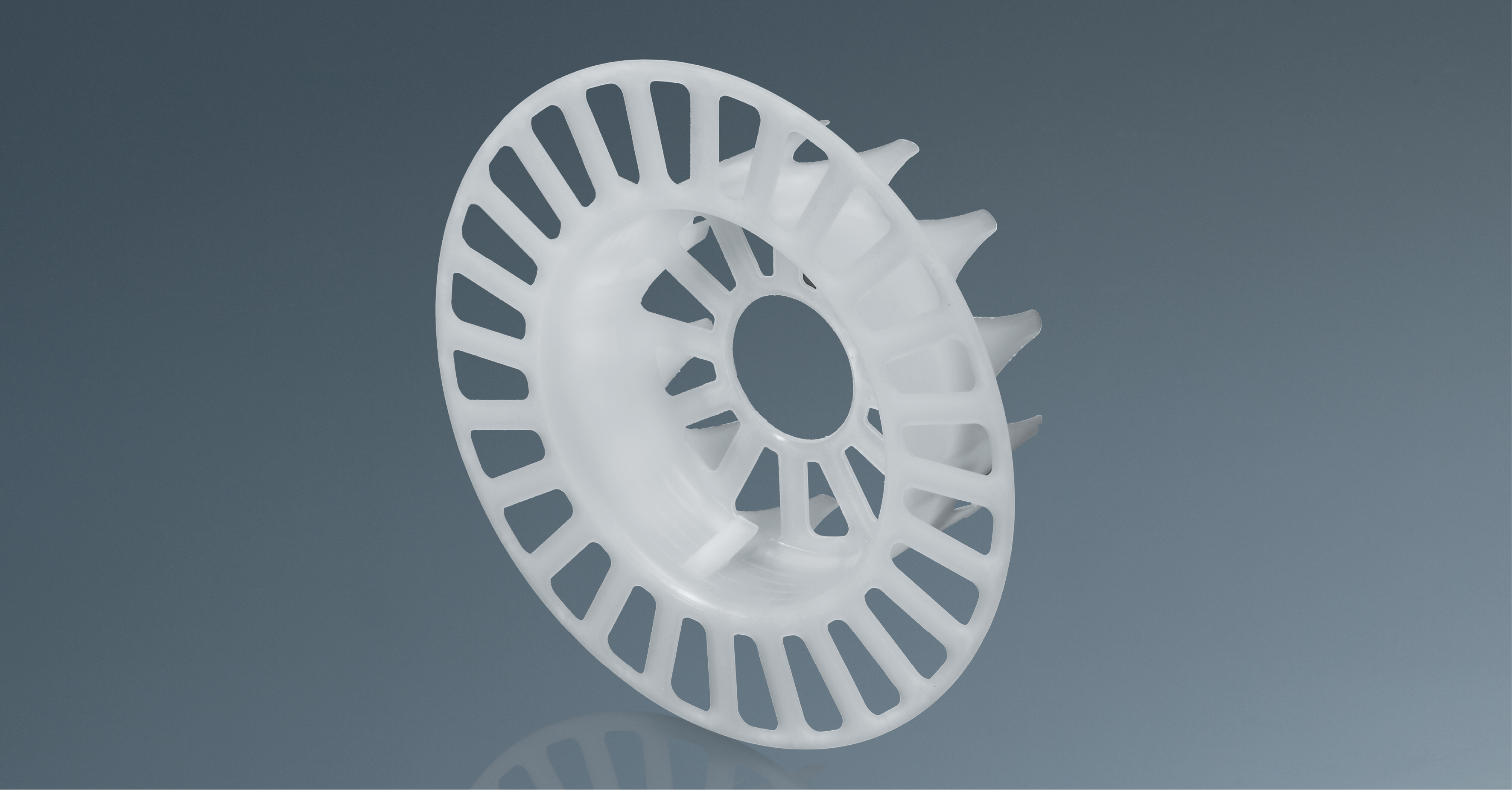
20 years ago, EJOT was the first manufacturer to develop the countersunk anchor installation – the so-called STR principle. With the special ETICS anchor and matching insulating material caps, anchor marks can be avoided in the long term. And unsightly spots will be a thing of the past.